Friday, June 19, 2009

ABCs of Digital Scanning


On Monday, June 22, from noon to 1 p.m., the Magazines & Newspapers Center will present a workshop on digital scanning. This one-hour, hands-on demonstration workshop is designed to introduce patrons to high resolution microform and flatbed digital scanning.


The Magazines & Newspapers Center staff will assist and provide training with editing, e-mailing, and printing digital images. Come scan with us!

- Address: 100 Larkin St. (at Grove)
- Location: Main Library, Fifth Floor, Magazines & Newspapers Center, Microfilm Room
- Event Date and Time: Monday, June 22, 2009 (noon - 1 p.m.)

Friday, June 12, 2009

When Wikipedia Meets the Library


The Magazines and Newspapers Center will present a program on Wednesday, June 17, from 6 to 7:30 p.m.—When Wikipedia Meets the Library: A Case Study from the University of San Francisco:

In Spring 2009, twelve students enrolled in Professor David Silver’s Digital Media Production class were assigned the task of overhauling the Wikipedia page for the University of San Francisco (USF). Required to work individually and collaboratively, and with resources from the Web and from USF’s Gleeson Library, the students’ goal was three-fold: to learn how Wikipedia works, to learn more about the university they attend, and to share their research with the rest of the world. In this talk, Professor Silver shares what happened.


David Silver is an assistant professor of Media Studies and the director of the Resource Center for Cyberculture Studies at the University of San Francisco. Together with Sarah Washburn, he is the co-director of The September Project.


- Address: 100 Larkin St. (at Grove)
- Location: Main Library, Latino/Hispanic Community Meeting Room B
- Event Date and Time: Wednesday, June 17, 2009 (6 to 7:30 p.m.)

Saturday, June 6, 2009

Tune in to the Digital Airwaves

It's coming to a TV station near you very soon, and there's no escaping it. You've probably heard people talking about it, seen it on the news, heard it on the radio, and read it in the newspaper. Millions of Americans have already prepared for this upcoming event. The groundbreaking Digital TV Transition will hit American television airwaves on June 12, 2009.

This new technology will unlock many channels on your TV sets, so to help you keep up with the programs, the Magazines & Newspapers Center would like to highlight one of its longstanding magazines--TV Guide.

You might have remembered going to your favorite supermarket, lining up in the grocery lines, and flipping through pages of the small squarebound magazine to pass the time. Well, times have changed, and the magazine has expanded its size and content. You're probably already familiar with getting weekly listings of your favorite cooking shows, soap operas, movies, documentaries, and TV series. Now, you can read up on previews of upcoming TV series, get the latest scoops from in-depth interviews with your favorite TV and movie stars, explore highlights from shows you may never even heard of, and more.

If you have a home satellite dish, and TV Guide just doesn't cut it, then reach over for Satellite Orbit, one of the most comprehensive if not definitive television guides for over a hundred different digital channels! This magazine covers a month's worth of TV listings and delineates them according to their respective time zones. Other special features include an alphabetical listing of movies with synopses and ratings, categorized sports listings, show listings organized by genre, and highlights of noteworthy shows

With only a few days remaining till this monumental digital transition, feel free to drop by the Magazines & Newspapers Center so you can use these magazines to help plan out your future television viewing schedule.

Saturday, May 30, 2009

Job Hunting and Career Exploration


With the current economic crisis looming overhead, manifested in part by job layoffs and hiring freezes, it might be discouraging looking for employment during these bleak times. However, a San Francisco Chronicle article highlighted how libraries can assist you during this recession.

The Magazines & Newspaper Center, for instance, carries selected job-related periodicals that might help you locate employment opportunities, enhance your job-seeking skills, or give you ideas for new career opportunities:

California Job Journal - A weekly publication covering career and employment information for over 25 years, this newspaper contains job listings in northern California, a career calendar, brief articles on selected job markets, and more.

Career Opportunities News
- Published six times a year, this newsletter features career trends in the workplace, minority issues and resources, career news of special interest to women, reviews of new books on career guidance, reports on the latest salary information, and more.

Federal Jobs Digest - A bi-weekly newspaper featuring job recruitment opportunities. Each issue contains over 5000 current opening with the federal government in the United States and overseas in all occupations and career levels.

Jobs Available - A bi-weekly listing of public sector employment opportunities in California. Sample department include building inspection, city administration, finance and accounting, parks and recreation, and more.

For additional resources, try the Occupational Outlook Handbook to explore new careers and trends. Last but not least, you can also check the Jobs and Careers Center for additional tips on using the Internet for searching jobs and obtaining a list of periodic classes offered at the library.

As an added bonus, the San Francisco Public Library now offers an open computer lab for job seekers on Mondays, 10 a.m. to 2 p.m. and Tuesdays, 9 a.m. to 1 p.m. on the 5th Floor in the Main Library Training Center. So come let the library help you find your next job or career.

Saturday, May 23, 2009

Go Eco with the Ecocard


Are you going green yet? It wasn't too long ago in our April posting when we highlighted titles from our Magazines & Newspapers Center collection in honor of Earth Day. In that same month, we also launched our Green Stacks program. Since then, the library has been showcasing a series of programs and exhibits ranging from community gardens and photographs of the urban wilderness to green cleaning products and organic foods, many of which were planned in part by staff in our Wallace Stegner Environmental Center. Check our Green Stacks Events page for an ongoing list of programs and special events.

Next, prepare for the launching of a pilot project in producing our very first San Francisco Public Library ecocard. For a limited time, you can exchange your current plastic library card for a more eco-friendly one manufactured from a renewable and biodegradable resource. This card is just one of many elements in the Library's new Green Stacks program, dedicated to helping San Francisco go green with the assistance of SF Environment and Friends of the San Francisco Public Library.

Saturday, May 16, 2009

Subscription Survivors -- A few of our longest-running titles


Although we work hard here at the library to bring you the latest in online content, it's sometimes very rewarding to step back, take a deep breath, and look at the collection that our forbears have gathered over the years. And what a collection it is, particularly considering that library workers had to start from scratch after the 1906 earthquake and fire. Over the years, we've managed to acquire many titles reaching back well into the 19th century, a few of which we continue to subscribe to today. This was the inspiration for a very cursory survey of some of our longest-running titles here at the Magazines and Newspapers Center. Here are some of our favorite old-timers:

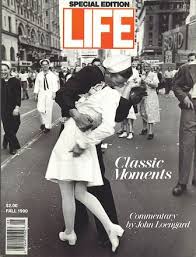
Time, Life, Newsweek, and U.S. News and World Report are perennial favorites, and we have a long run of each of these titles. These are, in fact, such popular titles that we make an exception in our shelving procedures for these: rather than shelving volumes from before 1990 in closed (behind-the-scenes) storage, we keep several decades worth of each of these titles out in the public area. That means that you can go to the shelves and find, for instance, the issue of Life from the week that you were born, provided you were born during or after 1936. (If you were born before 1936, you can find your birth issue upstairs in our special collections.

Sunset Magazine is a lifestyle magazine that probably predates the term "lifestyle magazine." Originally published by the Southern Pacific Railroad as a way of promoting the West Coast -- at the time, the company was the largest landowner in California, and they wanted to combat the Wild West image so that people would want to buy land from them -- Sunset has since become the property of Time, Inc., and circulates well over a million copies. Sunset has a reputation for publishing striking images, which the enthusiast might find are best viewed in person. We've got a full run available for paging at the Fifth Floor Page Desk.

Harper's (a.k.a. Harper's Bazaar, Harper's Magazine, Harper's New Monthly Magazine, the International Miscellany of Literature, Art and Science) and the Atlantic are both roughly 150 years old, and thus stand out as great American monthly magazines. Many literary greats, influential journalists, and public figures of just about every stripe have contributed words to these magazines over the years, and we have long runs of each available to anyone who comes by. How long? The Atlantic's run -- from 1857 to the present -- is impressive, but Harper's has them beat by seven years, and we have 1850 to the present available for paging. Navigating all of the title changes in our library catalog can be a bit difficult, so don't be shy about asking us about a particular issue!

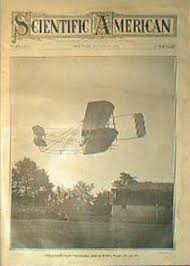
Scientific American may win the prize for magazine published for the longest time without a title change. (Librarians notice these things.) You can find a record for this title in our library catalog that goes back to 1846! Think of some of the scientific advances made since then -- Pasteur, Darwin, Bell, Freud, Curie, Heisenberg, Einstein, Russel, Sagan, and Watson are only a few of the scientific greats that have worked during this publication's life. One of the most endearing traits of this title is that it has been continuously written for a lay audience, meaning that its writers work to demystify some of the most complicated, but nonetheless most significant discoveries in the various fields of science. We have a full run, so stop by and have a look at the last century and a half of scientific discovery.

Unlike the features in Scientific American, this survey of long-running subscriptions was in no way scientific. The method was pretty simple -- I mostly looked down the rows of shelves in the closed stacks and looked for the largest blocks of like-colored volumes. So, if there are any long-running titles that you would like to point out, please let us know in the comments section below. We know you old-magazine-lovers are out there!